Follow the Tour on Social!

Get the latest news on the cool things flying and the cool places we fly!

Subscribe to our YouTube!

Subscribe and click the bell to get notified for live video broadcasts and highlights from the Tour!

Shop Tour Flight Gear


Archive

Meet the suit built for the trip to the Moon and back. The bright orange Orion Crew Survival System suit is what Artemis astronauts wear for launch, reentry, and the riskiest moments of the mission. Each one is custom fit, made by the David Clark Company, and if Orion ever lost cabin pressure, it could keep a crew member alive for up to six days. It even has survival gear for an ocean wait. Get up close to an exact replica in the NASA exhibit tent at Air Dot Show....
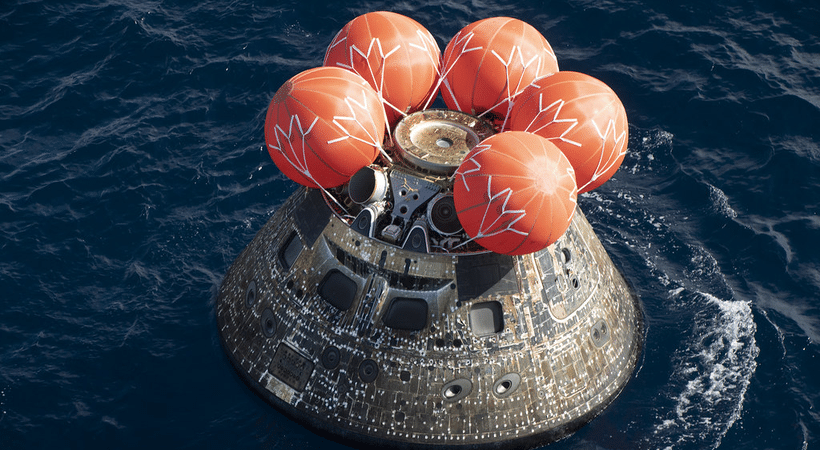
When Orion splashes down, it doesn't always land right side up. That's where the Crew Module Uprighting System comes in: five bright orange bags, each with its own inflation system, that fill with helium after landing and flip the capsule upright in under four minutes, then hold it steady for at least 24 hours so communications work and the crew stays safe. The bags on display flew on Artemis II, making this the only flown Artemis II hardware at the show. See it in the NASA exhibit tent at Air Dot Show....
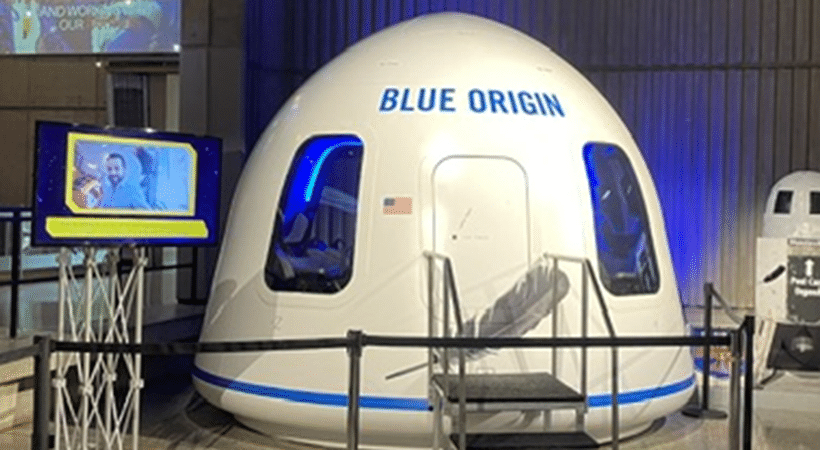
Step up to the future of human spaceflight with Blue Origin's New Shepard crew capsule. Designed to carry six astronauts past the Kármán line, the internationally recognized boundary of space, this capsule flies on a fully reusable rocket and features some of the largest windows ever flown in space, giving every seat a breathtaking view of Earth. Autonomous from liftoff to its parachute-assisted landing, New Shepard represents a new era of commercial space access. See it up close on display at Air Dot Show....

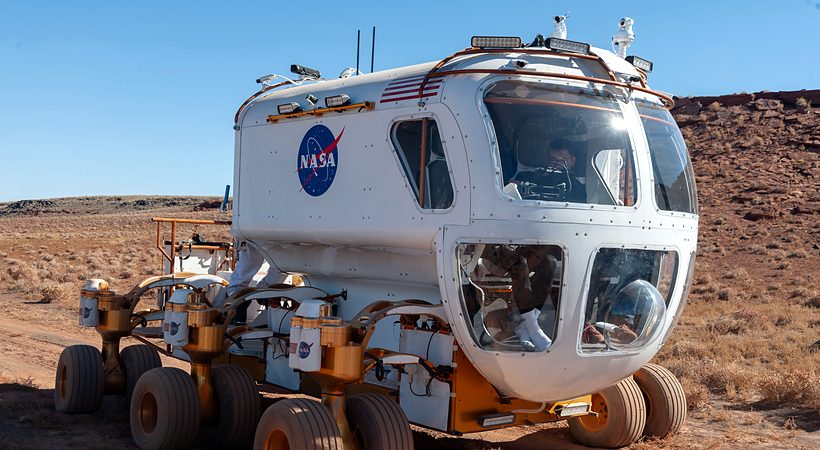
Imagine a camper built to explore the Moon and Mars! NASA's Space Exploration Vehicle is a pressurized rover concept: a small cabin on a 12-wheeled chassis where two astronauts can live and work for up to 14 days without wearing spacesuits. When it's time to go outside, they climb straight into spacesuits docked to the back through "suitports," much faster than the old way. Its wheels pivot so it can drive sideways like a crab over rough ground. NASA put SEV prototypes through weeks-long desert tests in Arizona, and an early version even rolled down Pennsylvania Avenue in the 2009 presidential inaugural parade. Seeing this one-of-a-kind explorer at Salute to America in Space is a glimpse into the future....

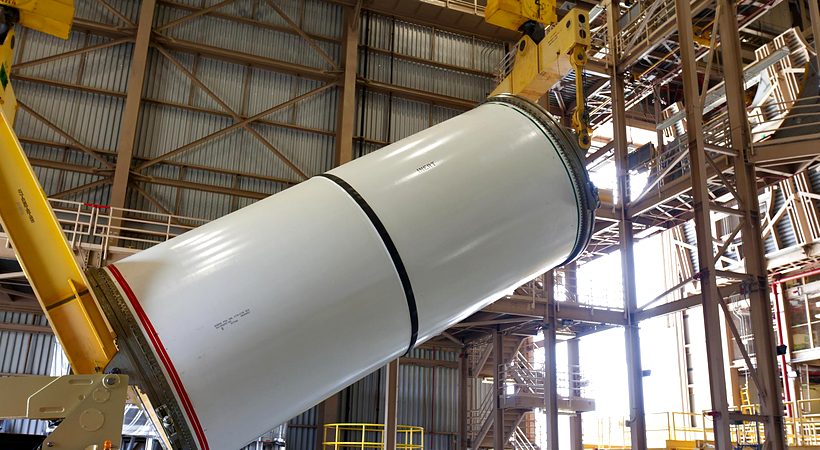
Get ready to feel small! This is a segment of the solid rocket booster that helps launch NASA's Space Launch System, the rocket that carries Artemis astronauts toward the Moon. Five of these giant steel segments stack up to make a single booster 177 feet tall, roughly 17 stories, and every SLS flies with two of them. Each booster burns about six tons of propellant every second and produces 3.6 million pounds of thrust, more than 14 four-engine jumbo jets. Together, the twin boosters provide more than 75 percent of the rocket's thrust at liftoff. This display segment is inert, meaning it carries no propellant, so you can safely walk right up to a piece of America's Moon rocket at...

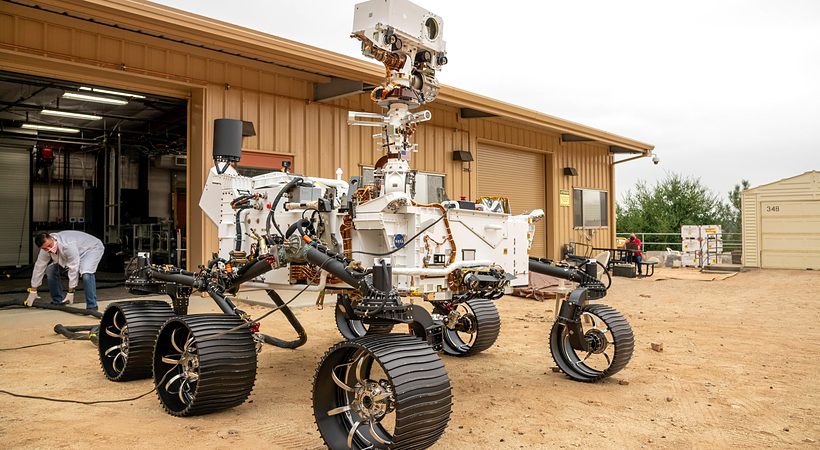
Meet the Mars rover that could be headed to the Moon! PROMISE, short for Polar Rover for Observation, Mapping and In-Situ Exploration, started life at NASA's Jet Propulsion Laboratory as OPTIMISM, the full-size Earth twin of the Perseverance rover now exploring Mars. For years it test-drove tricky moves in JPL's Mars Yard before engineers sent those commands to the Red Planet. In June 2026, NASA announced it is studying a bold new mission for it: refit the car-sized rover, power it with a nuclear battery instead of solar panels, and send it to the Moon's South Pole to map the terrain and prospect for resources like water ice. Seeing a rover with this kind of story up close at Salute...

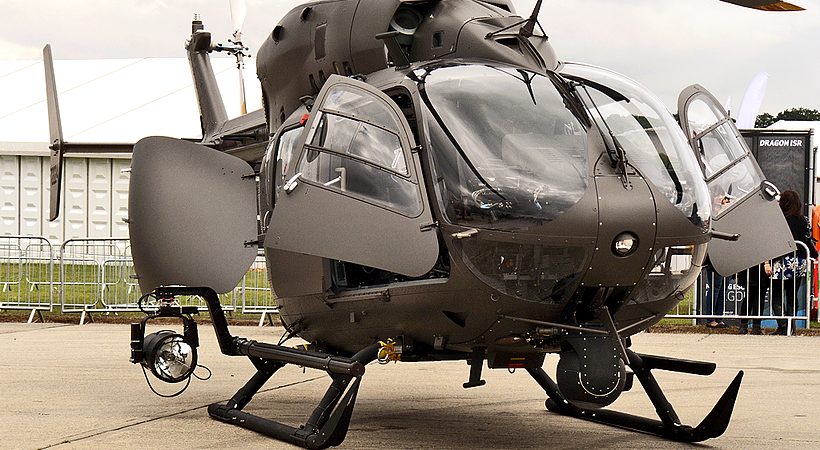
How do you practice landing on the Moon? You fly a helicopter into the Rocky Mountains! NASA has teamed up with the Colorado Army National Guard to train Artemis astronauts at a high-altitude flight school near Gypsum, Colorado, using helicopters like the UH-72 Lakota. Flying between about 6,500 and 14,200 feet, the helicopters run on thin power margins, much like a lunar lander. Snow and dust can blot out the view, so astronauts learn to trust their instruments and work as a team, just as they will on the Moon. NASA certified the course in 2025, and more than 20 astronauts have flown it. See a Lakota on display at Salute to America in Space and imagine flying to the...

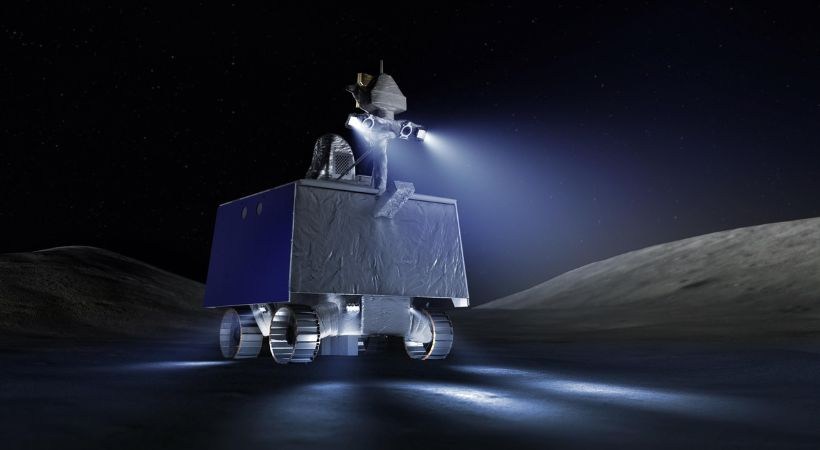
Is there water on the Moon, and can astronauts use it? NASA's VIPER, the Volatiles Investigating Polar Exploration Rover, was built to find out. This robotic explorer is designed to roam the Moon's South Pole for 100 days, using science instruments and a 3-foot drill to hunt for ice. VIPER can even venture into permanently shadowed craters, some of the coldest places in the solar system, where ice may have survived for billions of years. The maps it makes would be the first resource maps ever made on another world, helping future astronauts live off the land. NASA is targeting a late 2027 ride to the Moon aboard a Blue Origin lander. Come meet the rover with the coolest job...

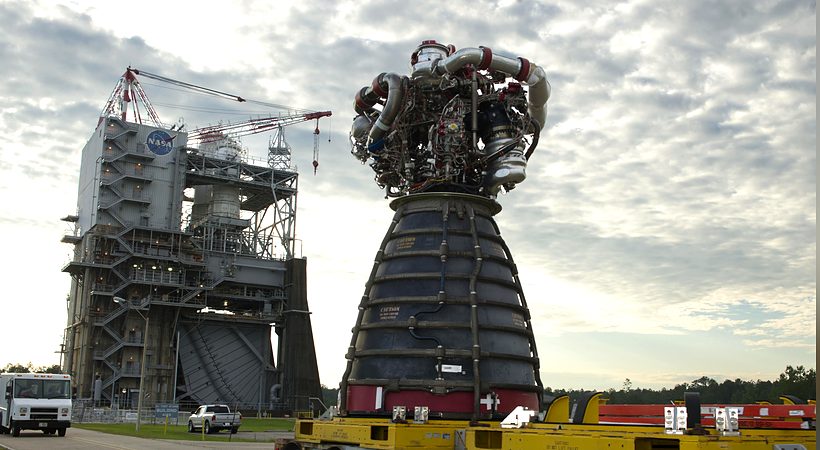
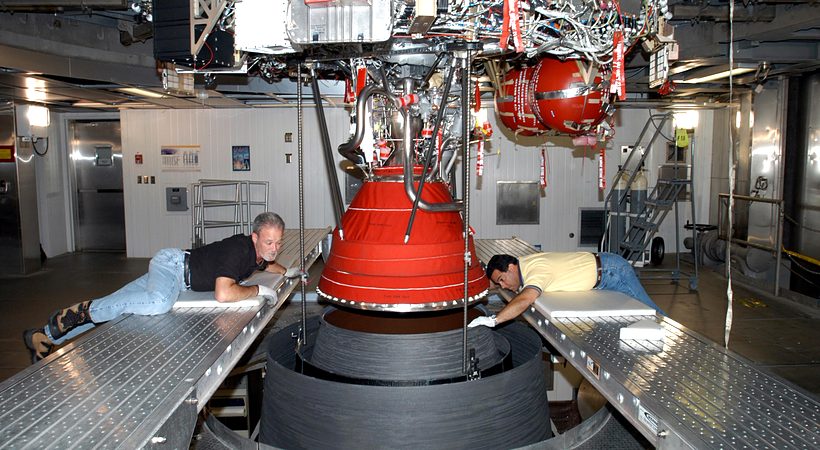
This is the engine that powers America to the Moon. The RS-25 got its start as the Space Shuttle Main Engine, flying on all 135 shuttle missions over three decades, and it is one of the most tested large rocket engines in history, with more than 3,000 starts. Today, four RS-25s sit at the bottom of NASA's Space Launch System core stage. Together they produce more than 2 million pounds of thrust, burning liquid hydrogen and liquid oxygen during the rocket's roughly eight-and-a-half-minute climb to space. In April 2026, SLS launched the Artemis II astronauts from Kennedy Space Center on their historic trip around the Moon. Standing next to an RS-25 on display at Salute to America in Space is...

Meet one of the hardest-working rocket engines in American history. The RL10 first flew on November 27, 1963, launching from right here on Florida's Space Coast, and it was the first engine ever to fire liquid hydrogen in flight. Since then, more than 500 RL10s have flown to space, helping launch hundreds of satellites and sending spacecraft to explore every planet in our solar system. Built today in West Palm Beach, Florida, an RL10 produces nearly 25,000 pounds of thrust in the vacuum of space. A single RL10 powers the upper stage of NASA's Space Launch System, the stage that helped send Orion toward the Moon on Artemis I. Don't miss this Space Coast legend on display at Salute to...